Underwater optics · measured fish vision
What colour lure can the fish you are after actually see?
Pick a species, a water and a depth. This runs the same model as the app, in your browser.
Underwater optics and measured fish vision, for every target species and water type in the catalogue. Every number is sourced. Nothing promises you a catch.
Every number sourced. No catch promised.
Fish do not see what you see
Target species
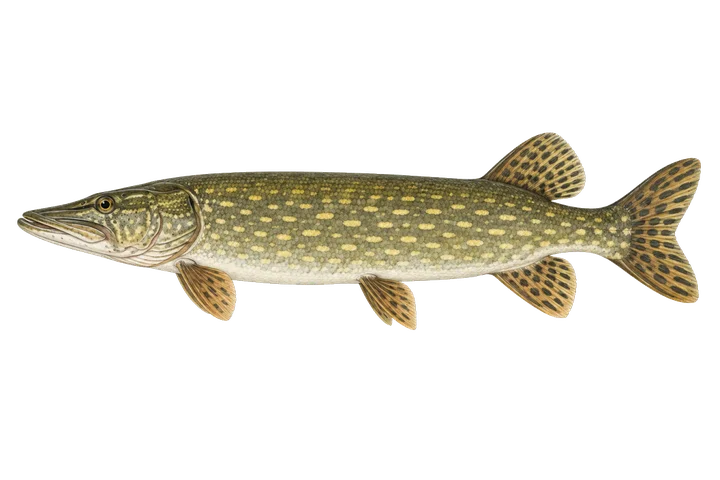
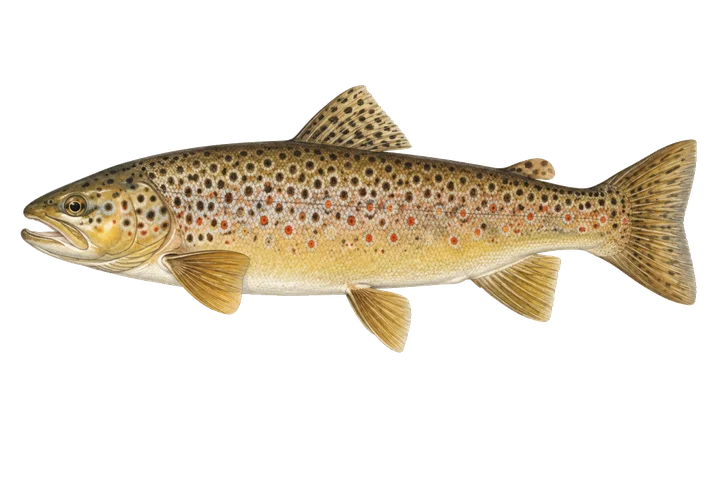
Browse species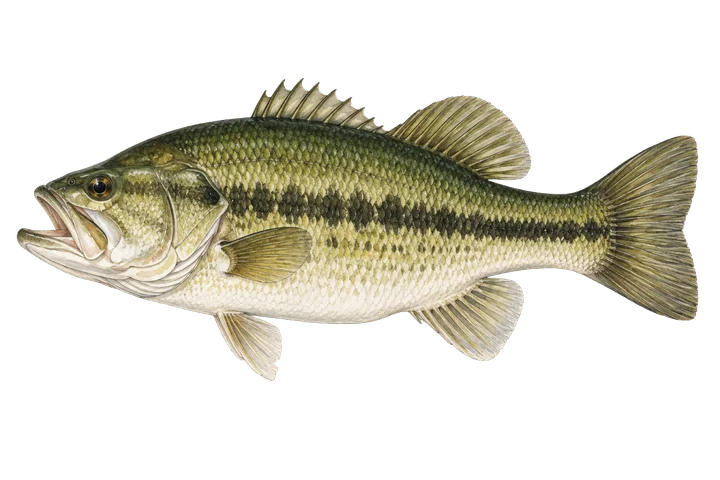
Read this before you trust a number
This app models the physics of light and contrast underwater. It does not model fish behaviour and it cannot promise you a catch. What it tells you is how much a lure stands out from the water — which is a real, measurable quantity, and the one that decides whether a fish can tell your lure apart from the background at all.
Water types
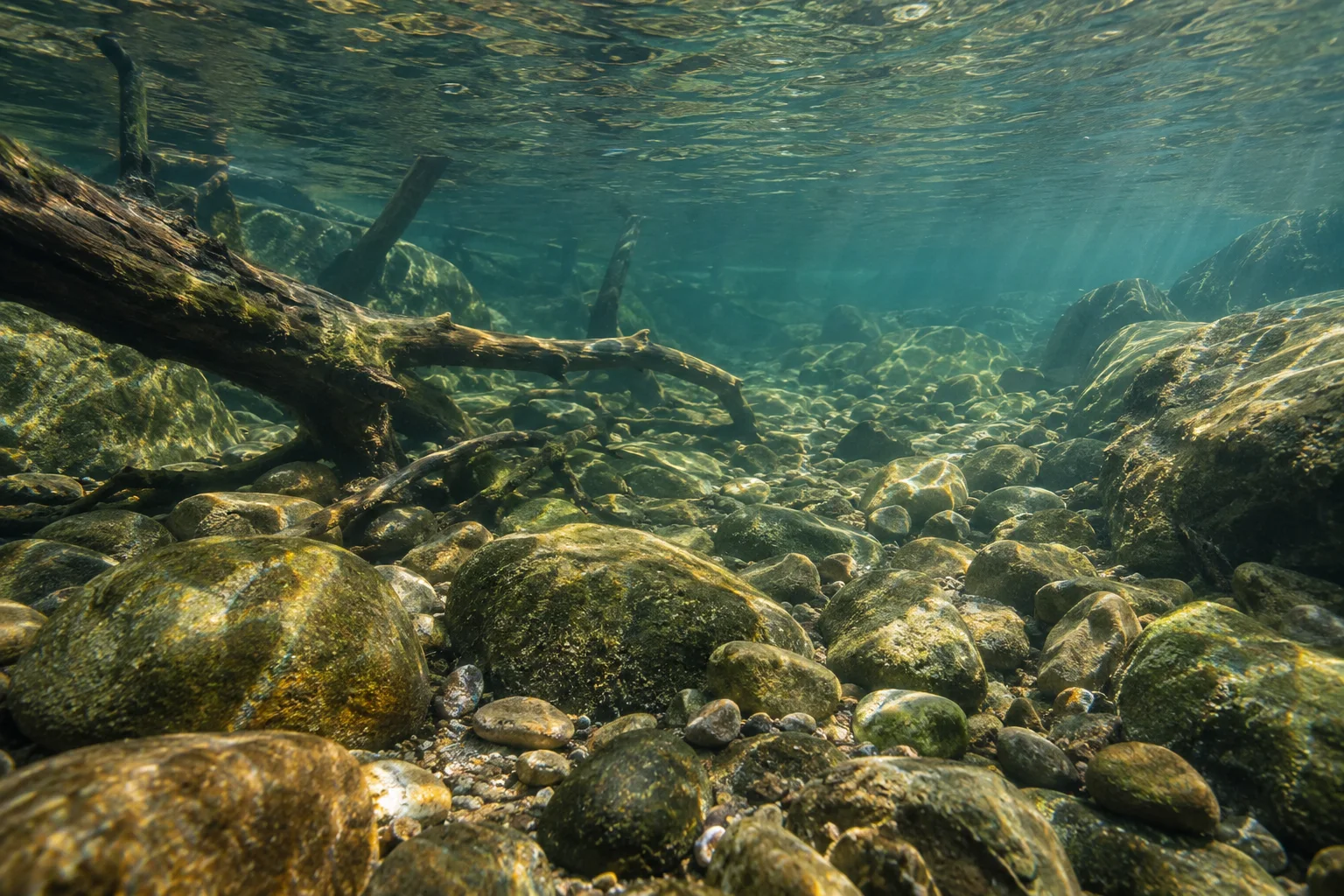 Freshwater
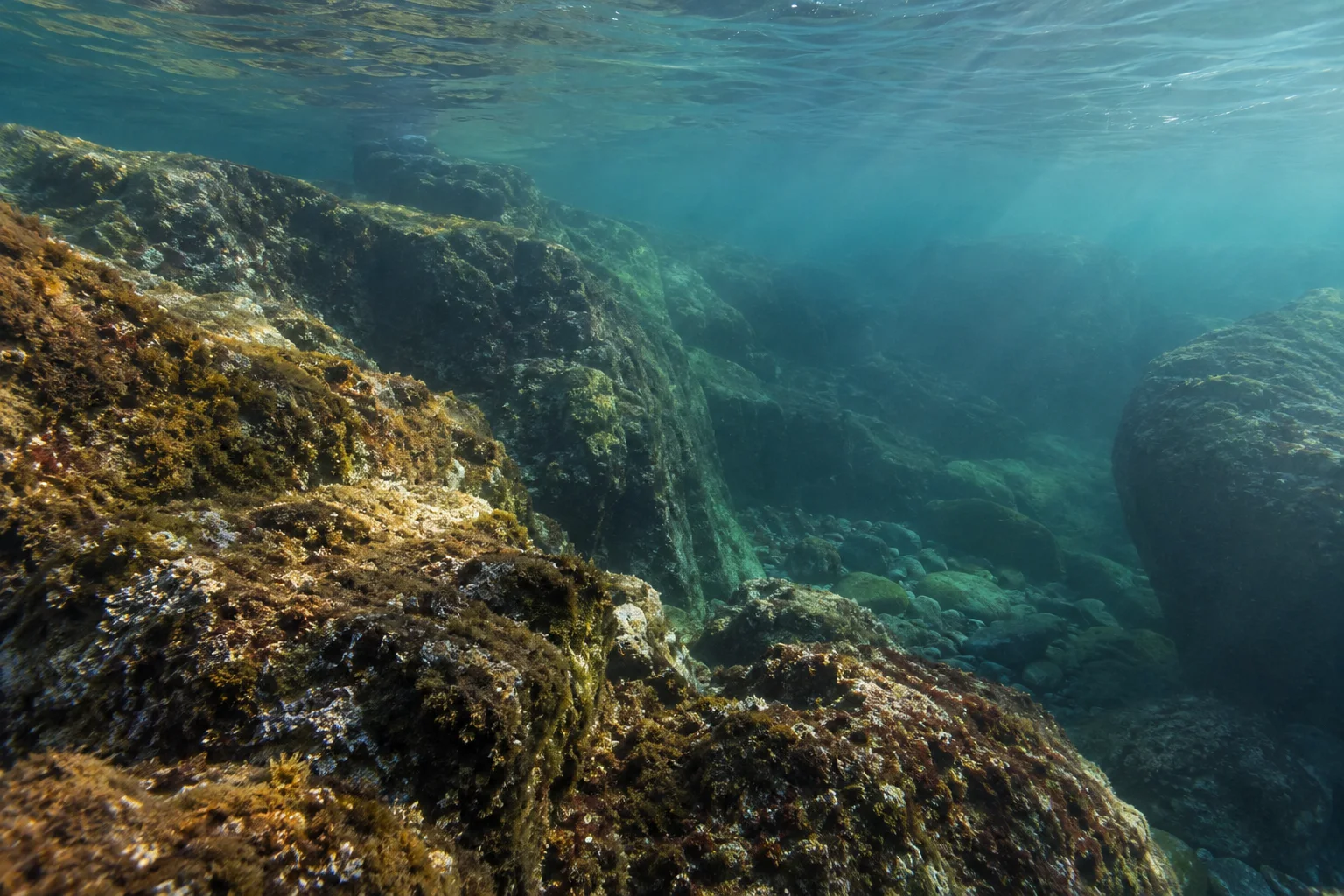 Salt water
Water types · 19
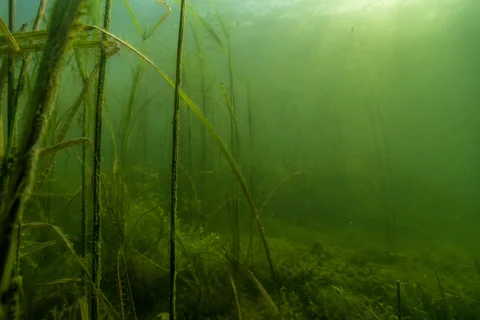
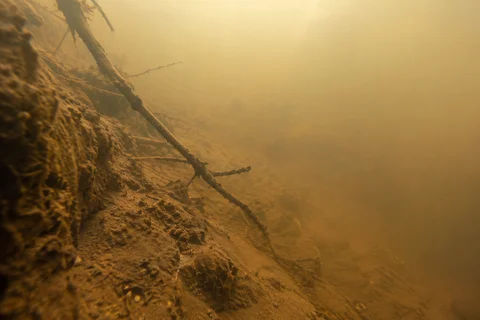
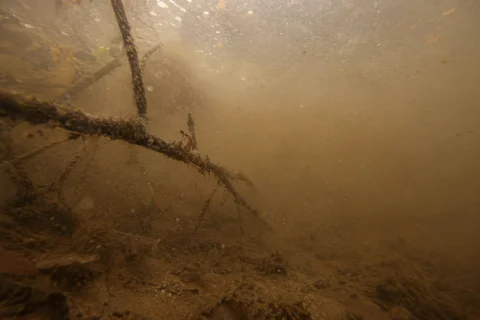
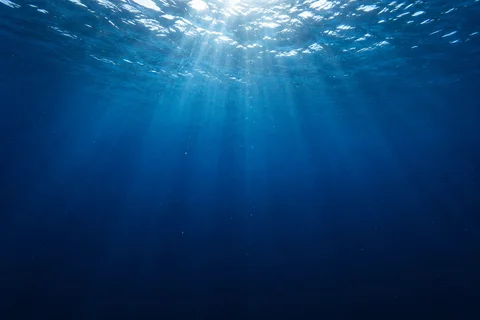
Target species
No species match that search.
Freshwater


Inshore


Offshore


Lure colour calculator
Pick a species, a water and a depth. This runs the same model as the app, in your browser.
Open the calculatorQuestions people actually ask
At what depth does red disappear underwater?
Red light is down to 1% of its surface strength somewhere between 1.2 m and 11 m, depending entirely on the water: 11 m in the clearest ocean, 1.2 m in flood water. But absolute range is the less useful half of the answer. What matters is which colour survives best, and that flips: the wavelength that penetrates furthest is about 470 nm — blue-green — in clear ocean, and about 680 nm — deep red — in a tannin-stained lake, because dissolved organic matter absorbs short wavelengths hardest. In tannic water red is the colour that wins, which is the opposite of the usual advice.
Does lure colour actually matter?
It matters for whether a fish can detect the lure at all, which is a narrower claim than most advice makes. This site computes the contrast between a lure and the water behind it, and the distance at which that contrast rises above the species’ detection threshold. It cannot tell you whether a fish will strike: that is behaviour, and no optical model predicts it.
What colour lure should I use in muddy water?
It depends on which way the fish is looking, which is why the popular advice contradicts itself. Looking sideways or down, brightness wins and chartreuse or white stand out. Looking up against the surface, nothing can be brighter than the sky, so only a dark silhouette makes contrast — which is why black and blue also "always produce" in muddy water. Both camps are right about different geometries.
Can fish see colour?
Most of them see two colours where you see three. Of the 54 species here, 19 have direct spectral measurements of their cones; trout, salmon and carp have four cone types including one sensitive to ultraviolet, and sharks have one and are colour-blind. Each of those sorts the same tackle box differently.
Which colour of light penetrates deepest?
About 470 nm in clear ocean water and about 680 nm in a tannin-stained lake — blue-green in one, deep red in the other, computed from the water’s own absorption rather than read off a chart. There is no single answer, and a chart that gives one is describing a water it did not name.
Explainers
-
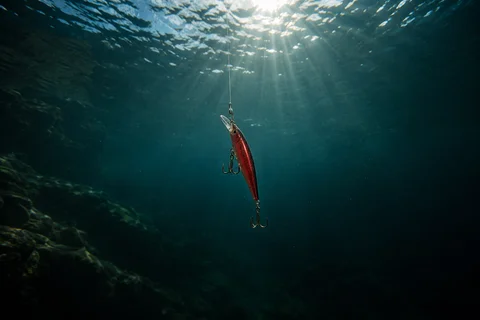
Why red disappears underwater — and when it does not
Red is the first colour water eats in clear seas. In a tannin-stained lake the order reverses and red travels furthest. Here is the physics, with the numbers. -
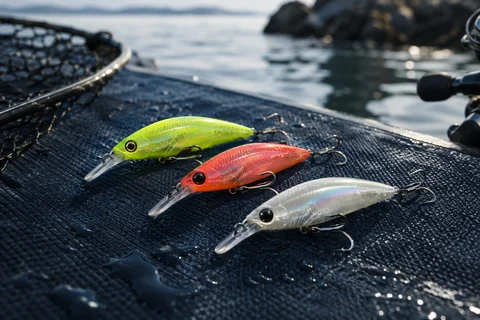
Do UV lures work? What the optics actually says
Trout, salmon and carp do have a fourth cone for ultraviolet. Whether a UV-painted lure is worth buying is a different question, and the water answers it. -
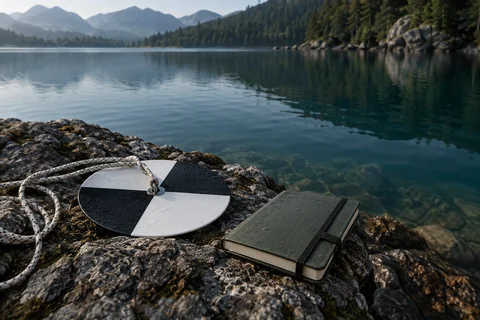
Method and sources
Every number in this app and on this site, where it came from, and what it cannot tell you. Written for the sceptical reader. -
Glossary
The technical terms this site uses, in plain language: Jerlov type, Secchi depth, CDOM, beam attenuation, Weber contrast, λmax, A1 and A2.